Collin slid into his pack and continued through the canyon. The walls sloped near the bottom spilling water eroded bentonite clay. Layers of sandstone, more resistant to weathering, jutted out in rough edges. Collin was reminded of a Gothic cathedral–the Sagrada, he thought—and like the cathedral still being formed. Before his trip he had visited the Nevada State Historical Society and spent weeks pouring through John T Reid’s donated books on mining, history, and archaeology. The collection was available to mining experts and scientists. He was most interested in King’s 1868-1871 40th Parallel Survey and notes by Reid himself. He had made exploratory trips into the canyon over the past two years convinced it would yield precious fire opal. During each visit he had buried a cache of water in preparation for a prolonged study. And now he worked down the canyon making test holes. According to the land survey the canyon was ten miles long with an average depth of 300 feet. He had parked his fully stocked, off-road accessorized Jeep as close as he could get to the entrance and set off on foot. Opals formed when seeping water deposited silica in cracks and pockets. The gel-like substance solidified over millions of years forming tiny spheres that reflect light in brilliant display. Collin had found some surface opal and some promising excavations that he marked with posts for deeper digging. It was his fifth day in and he had reached the end of the canyon. Miles of playa spilled out in hues of cream and orange. In the morning he would work his way back digging along the opposite wall. Collin stopped to make camp. Starting a fire he heated a package of chicken curry and read from De Re Metallica. First published in 1556, translated into English in 1912 by mining engineer and US President Herbert Hoover, the book was still studied at universities such as Colorado School of Mines. Collin delved into the old for overlooked or forgotten bits of insight and wisdom. He also brought Louis L’Amour’s Comstock Lode–he could read and let his imagination drift. He loved any story, fictional or otherwise, on the topic of the west or mining. Some of his best scientific insights had come from fiction. He was of the opinion that there was value in thinking like an artist, without limitation. The air had been unusually still and the days quiet and warm. Collin had been so focused on scouting he hadn’t noticed. At night the silence amplified, demanding attention. Collin couldn’t explain it scientifically. A plausible explanation might be that the reduction in sight heightened the sense of hearing, he wasn’t sure. The canyon was sparse of vegetation and wildlife, a few rattlesnakes and rodents. He finished his dinner and dessert of dried fruit, made his camp neat and crawled into his tent. He read from The Comstock Lode before falling asleep. Deep in the night he was awakened by the scream of a mountain lion. This was an unusual place for a cougar to roam. There were rabbits, antelope, and springs in nearby mountains. But this canyon was surrounded by playa and generally the cougar did not like flat, open expanses. Collin fell back asleep. In the morning he made coffee and ate a dense bread loaded with nuts and spread with almond butter for good measure. He would need the calories for carrying his supplies and shoveling. His method was to carry only necessary supplies. He returned at the end of the day for the tent and large pack and moved to the next camp spot. As he got his day pack ready with snacks, water, and tools he noticed lion tracks. Collin wasn’t uneasy. The lion was probably just curious. He headed down the canyon observing the tint of the rocks. Sometimes it was just a feeling that led him to a location. He knelt down to dig. Immediately he found precious opals–brown and rough, a light hit of the chisel revealing flash and flame. The allure of opals, he thought, was not just their beauty but that they appeared to contain something—a worldscape, a universe, and in this case fire. He continued to dig further. His shovel came in contact with a large rock with perhaps a diameter of 25 inches. That was not unusual. The soil looked soft, but was full of rock. Collin inspected its brown moonlike surface. Carefully, he glanced it with his chisel. Opal. Probably aggregate, he thought. He got his small pick and brushes and spent the day cleaning it. Brushing away loose dirt broken free with the chisel revealed bone. It wasn’t unheard of to find opal in fossils. Once, while on a dig in Oregon, a colleague unearthed black opal formed in a fossilized snake head. After a couple of hours of careful work he could see what looked like an orbital socket, opal inside. Some of the opal in the rock separated into smaller stones. He didn’t want to get excited about the possibility that a single opal filled the fossil and he couldn’t make out the size of the bone yet. By late afternoon he had exposed enough to know–not know exactly because it was foreign–but have some understanding of what lay before him. It was clearly humanoid. The brain cavity was exceptionally large. It was filled with what appeared to be a single opal. Collin wanted to get some help in uncovering more of it, not risk damaging it. It was too heavy to carry, so he disguised it in place. It was getting late and he decided to camp in the same spot he had the night before. The possibilities of what his find meant occupied his thoughts as he heated his dinner and watched the flames. He knew about Reid’s discoveries in the Lovelock Caves. Some of that research and the actual skeletons were restricted even to him. He also knew of the Paiute stories about a race of giants. In fact, when Reid was a youth he had spent much time talking with Sarah Winnemucca. Collin knew that he had found something special. He planned to continue his test digging in the morning. There was a reason he was drawn to this canyon, perhaps there was more to find. That night he was again awakened by the sounds of a mountain lion. It sounded as if the lion were fighting something. It was well past mating season. Collin was perplexed, but he fell back to sleep with his pick ax in hand.
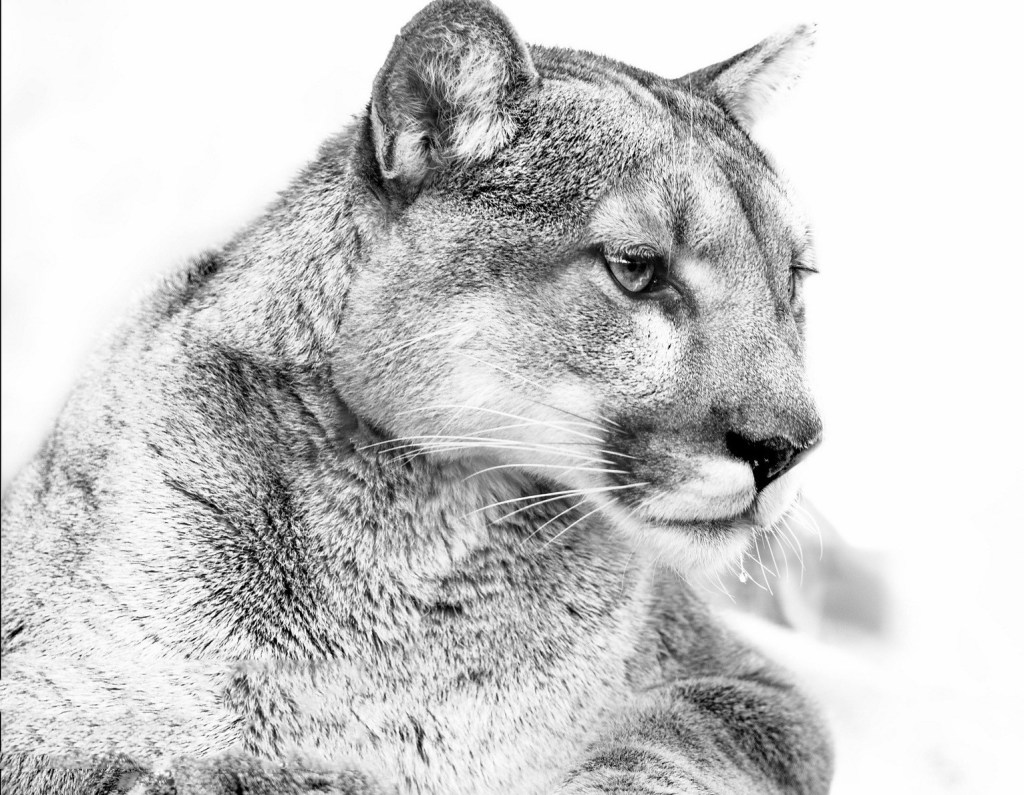
After coffee and a hearty bread and nut butter breakfast, Collin continued through the canyon with his day pack. As he started to kneel to dig something caught his eye, a graceful movement that his body registered with fear. He turned and looked into green eyes. The cat was black. Collin couldn’t believe what he was seeing, but averted his eyes and stood, slowly raising his hands above his head. He banged his metal tools together and took careful steps backward. He looked at the panther’s body. It hadn’t moved. And then suddenly it turned and ran. Collin was awed by its beauty. Was that the cougar he had been hearing? He had read about sightings in New Orleans and even in Marin County in the 1940’s, but never this far north. He made his way back to camp. He’d head out tonight and come back another time. As he hiked out he tried to make sense of the experience. He wasn’t dehydrated or low on electrolytes. He had seen the prints, so it wasn’t a figment of his imagination. What was Reid’s theory on the ancient race of giants? He had believed they were the ancestors of the Mayans. A complex stone calendar was one of the findings in Reid’s collection and he had studied the petroglyphs and found commonalities with the Mayans. Collin gathered his supplies together and started back. He had several precious opals with him. He thought about the skull. The black panther in Mayan culture symbolized a connection between the dead and living and was seen as a protector. What was the message? Should he leave the skull buried or should it be shared? Who would it benefit? If it belonged to the same people Reid had found would it be written about? Those bones had been shelved in the dusty back rooms of museums. If people knew anything at all of their culture, it was myth. Collin was tempted by the find, the skull and fire opal that might possibly be the largest ever discovered. He searched his soul as he continued. It was dark when he reached his vehicle. He loaded up his supplies and was enveloped by the night. He sat on the hood of his Jeep and listened, really listened. The matrix of being pulsed in his ears. He saw the shadow outline of the panther, the green eyes looked into his. He got into his Jeep and drove. He knew what he would do.


 The Vaquero
Leave a reply to mysteriouslycoolcddf72bfd5 Cancel reply