Bolivar climbed the mountain following his herd. Their bleating and wooly scent the backdrop of his world nine months of the year. It was July 1st and grazing had just opened in the Warner Mountains. They started up at the south end of the mountain range– where the inclines began sandy and steep. They’d reach the first pasture by afternoon. He’d set up camp and then do some training–four laps around the sheep. Each lap might be several miles. The pasture was thousands of feet higher than the valley and spring would still be lingering there. Early in the season he had stopped at the Sawtelle Hotel in Eagleville. Emma, who ran the place, was always kind. She made a Basque dish she called “beef stew.” She served it to Bolivar with a wink, “Marmita,” she’d say setting his bowl down and they’d laugh. She’d always ask if he’d like a little Picon. He declined this time. He told her he was training for a race, a marathon. It was 1907 and long distance running events were becoming popular. Usually they were advertised a couple of weeks before the event, but this one was advertised months in advance, perhaps a new marketing tactic. He pulled out the San Francisco Chronicle folded in his waist band and opened to the page showing Emma.
“Look. November 1st. 28 miles. All the crack runners in California will be there.”
Loud laughter interrupted him. Emma turned and gave them an eye.
“You boys shut it! Hear.” No one liked to get on Emma’s bad side.
“Come on. It’s jus hilarious thas all. This sheeps boy here running a marathon.” The two ranch hands started laughing again, hitting the table with their fists.
“Out! You stay out until you can behave. Hear!” Emma kicked them out.
Emma told Bolivar she was excited to see how he’d do in the event. She knew he’d finish. Bolivar started running in the valley. It was often hot and it was flat. If he saw a cattleman or ranch hand he’d stop not wanting to start any problems. The two at Emma’s had told their co-workers about him entering the marathon and the entire valley knew about it now. They were calling him “marathon boy.” He didn’t mind the name. If it was an insult they should have come up with something better.
They had reached the high pasture. The sheep spread out and grazed. Bolivar set up his canvas tent, put all his gear in there and set out at a jog. He liked to warm up and get faster with each lap. The pasture was on a slope and he moved into the trees at times. It was grassy, rocky, there were downed logs and a few snow fields. Perfect for training he thought. The race course was advertised as hilly, but on maintained coastal roads. He completed the laps in three hours. Bolivar made a fire and heated his dinner, mutton stew and bread made in a cast iron pan. After cleaning up, he went into his tent with his lantern and got a book out of his bag, The Virginian. He chuckled thinking about the reaction people might have if they knew it was his favorite book. They were all herdsmen. They all wanted the same thing. His page was marked with a clipping from the San Francisco Call, August 5, 1896. Spiros Louces Visits Berkeley. Spiros had won the gold medal at the revival of the Olympic Games in Athens. He was a shepherd who trained in the mountains carrying water from camp to camp. Bolivar was inspired by his story. He had never thought about running as a competitive sport before reading about Spiros. He read from his book, “Daring, laughter, endurance–these are what I saw on the countenances of the cow-boys.” He re-read the same line three times, his eyelids too heavy to keep open. Bolivar blew out his light and fell asleep.
He was awakened by laughing and the sound of boots, loud and sporadic like stumbling.
“Marathon Boy!” They laughed. They were drunk. They must of ridden up here.
“Let’s pull em out.” One of them said. Bolivar decided to get out and face them. He didn’t want to have to shoot these idiots, but he didn’t think he could reason with drunk men. He got out of his tent. There were three of them including the two from Emma’s.
“What do you want?” They were laughing and not steady on their feet. Bolivar was sure he could outrun them if needed.
“Les cut his tendon.” The tall one said and snatched his leg is one swift movement. Bolivar was knocked onto the ground.
“No, let’s smash his foot with a rock. Id look like an accident.” More laughter. Bolivar would wait for the right moment to run.
“Hey, I thought we was jus gonna scare him! I don’t want no trouble. Jus thought we was gonna ‘ave a little fun.” The tall one punched his companion. He fell back unconscious.
“What’d the hell you do that for!”
“Cus I damn well felt like it!” The tall one swung for him, but the other ducked and punched him in the stomach. Bolivar was free now and the scene was feeling comedic. The tall one and his buddy were in a full on fight. The shorter man prevailed and stumbled away mumbling something incomprehensible and shouting.
“Jus… lil…un. Da…ards. Larry!”
Bolivar didn’t want to be in the area when the two men woke up. He remembered that line from The Virginian he liked: It’s not a brave man that’s dangerous…It’s the cowards that scare me.
He broke down his camp. His leg was wrenched pretty good, his knee throbbing. He hobbled with his gear up the meadow towards the trees. Bolivar didn’t get mad easily, but he felt heated thinking about those dunderheads messing with his training. Calm down he told himself. He’d rest up a few days and take stock then. See what’s what. He always kept medical supplies with him. He drank willow bark tea and applied arnica root to his knee. He felt better after a day, but he’d be patient. After three days he was ready to run again. As the weeks progressed, he moved his sheep to higher pastures keeping his routine of lapping around the sheep. He wasn’t bothered by any drunk ranch hands again. In the fall when the mule ears dried out and the Aspens showed yellow they moved lower until finally they were back in Eagleville. The end of grazing season in the mountains was October 31st, but Bolivar came down a week early to travel to the race. Emma met him at the stage, hugged him, and wished him luck. He’d take the stage to Reno and then the train to San Francisco.
Disembarking onto the platform in San Francisco, a group of young ladies held signs welcoming the runners. Bolivar blended into the crowd and made his way to the Argo Hotel on Mission. The clerk at the hotel asked if he was running the marathon. He was going to say no, but changed his mind. The clerk smiled and welcomed Bolivar to San Francisco. The porter led him to his room on the second story facing the city. He lay on the bed and closed his eyes walking through the course description in his mind. It would start on the waterfront, go through the Golden Gate Park, along the ocean, then turn up into the country, and return. He didn’t know what any of the area might look like. Bolivar made his way to the lobby. The clerk recommended a restaurant nearby. People on the streets were talking about the race. He heard bets being taken. That made him feel nervous for some reason. After dinner he made his way back to his hotel. The race started at 10 AM the next morning.
Bolivar woke at 7 AM and put on linen pants and soft leather shoes. He wasn’t used to the humidity and it felt cold even though the temperature was warmer than the mountains he came from. He put on the thick wool sweater over his long button up shirt and made his way down to the lobby. Breakfast was being served buffet style. He was surprised to learn some guests had come down to see him off. Bolivar had read about athletes hydrating with alcohol. He wasn’t sure if it was really meant to hydrate, maybe ease discomfort. Spiros had sipped cognac on the way to his win. In his training, Bolivar found drinking from the springs worked best for him. He had tried whiskey, water was better. He walked towards the starting line, the crowds already deep. He weaved his way through to the start. A couple dozen men stood near, lean and sinewy. A few wore rubber soled running shoes and cotton shorts. The announcer climbed a ladder and spoke into the mega phone. Bolivar paid close attention to the course information—marked with flagging, one water stop. Without warning a pistol sounded and the runners took off at a break neck pace. Spectators ran into the street yelling, the runners darted back and forth to avoid collisions. Horseback riders trotted alongside throwing candies. It was too soon for food, but Boliver grabbed a few for later. Golden Gate park was beautiful–manicured like a garden. Automobiles joined the course. The race made its way downhill to the ocean. Two runners ran down onto the beach and got into the waves. Bolivar pulled his sweater off and threw it on the road. He heard screams and turned to see a group of girls swinging his sweater over their heads. He waved at them. The lead runner was ahead in the distance. A car pulled up beside him and handed him a drink. Bolivar counted ten runners ahead. The course turned inland, climbing into tall trees. The road was muddy, a little slippery. He wondered if rubber soles would have better traction than leather. He passed a couple of runners on the climb. The spectators thinned to those with a buggy, or automobile, or on horseback. He was looking forward to a drink of water. When he got to the table there was only alcohol. With a smile, the volunteer said that he’d dumped all the water, donating the liquor to the runners out of his own pocket. Bolivar thanked him and ran on. He was sure he’d come upon a spring in this forest. Something hit him from behind. He rolled several times before coming to a stop. The runner laughed and ran on. He wasn’t going to get angry. Waste of energy. Patience. The hills were his strength. He’d get him on the next incline. He ate a candy and saw a spring ahead. Getting back onto the course he started making ground. He increased his pace gaining on the runner who pushed him. Bolivar leveled up with him on the hill. The runner’s breathing was labored, Bolivar surged ahead. He heard the man swear. They made the turn around. Fourteen miles. Time to work. He realized he had only seen five runners heading back. The others must have dropped. He felt a little adrenaline. Stay controlled, he told himself. He drank again from the spring and ate another candy. Turning onto the ocean front road, he could see the leaders about half a mile ahead. A car pulled up along. The passengers passed them food, drink. Bolivar didn’t know what it might be. The onlookers were getting excited as the leaders closed the gap with each other. The girls were still there with his sweater. They waved it, cheering for him. Turning up the hill towards Golden Gate Park, he made ground on the lead pack. They were less than a quarter of a mile ahead now. One in shorts doubled over and sat down. Could he pick off one more runner, finish third? He worked the hills, his breath coming loudly now. He closed the gap with the runner in third, sat on his shoulder before making his move. The crowds were frenzied, squeezing onto the street making the route narrow. Bolivar pushed and passed. The runner in first place looked back. Bolivar saw his expression and surged into a sprint. The finish line in sight, Bolivar moved ahead of the leader. He raised his hands up crossing the tape. He was smothered by the cheering crowd. After giving interviews to the press he went back to the hotel eager to change his clothes and eat. Guests were waiting for him offering him food and drink. The front desk manager said that there was no charge for his stay, they were honored to have the winner of the marathon at their hotel. Bolivar decided to stay one more night and explore the city. On the train home he replayed the race in his mind. It had been a perfect day for him. San Francisco aroused his senses, but he missed the high desert. When the stage approached Eagleville, he saw a large group of people waiting. Music drifted across the flats and then closer, he could smell barbeque. People had come from all over the valley to congratulate him, including ranchers and buckaroos. He felt lucky to live in this place still holding on to old ways. If differences were set aside, they could all flourish. He looked at his neighbors and recalled a prediction he had read in the Silver State:
“…the ranges for both sheep and cattle will inevitably grow less…and the cowboy and the sheepherder will inevitably be things of the past. When they finally disappear an interesting and exciting epoch of frontier life will have passed.”
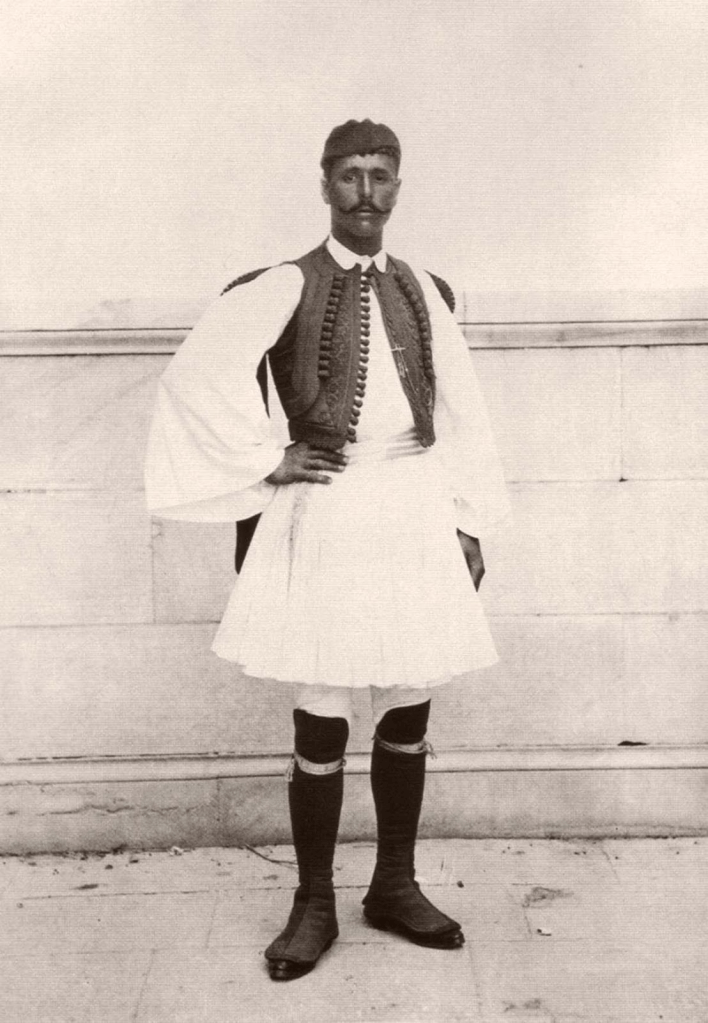
Spyridon Louis, 1896 Olympic Gold Medalist Marathon


 The Vaquero
Leave a reply to radtotallya6785cf0f1 Cancel reply